Why the Cheapest Option in Emergency Mining Equipment Procurement Often Costs the Most
-
Opinion: In emergency procurement, quality isn't a cost—it's insurance
-
Argument 1: Downtime costs far outweigh the OEM premium
-
Argument 2: Dealer networks and portfolio breadth determine response speed
-
Argument 3: Quality directly shapes how clients perceive your brand
-
Countering the expected pushback: Aren't OEM dealers always slower and more expensive?
-
Professional boundaries and data gaps
-
Restating the opinion: Quality is an extension of your brand
-
Argument 1: Downtime costs far outweigh the OEM premium
Opinion: In emergency procurement, quality isn't a cost—it's insurance
In mining and rock processing, when your drill rig or crusher goes down at the worst possible moment, choosing the cheapest supplier or a third-party part is a costly mistake. I firmly believe that quality—especially OEM parts and certified dealer support from a company like Sandvik—is the key to protecting your brand image and operational continuity.
I'm a procurement coordinator at a mining equipment company. I've handled 200+ rush orders in five years, including same-day turnarounds for large-scale mining clients. My job isn't to find the lowest price. It's to find the most reliable solution in the shortest time. And here's what I've learned: the money you save on parts, you lose on downtime and client trust.
Argument 1: Downtime costs far outweigh the OEM premium
In March 2024, a client called at 6 PM needing a hydraulic pump for an underground loader within 36 hours. Normal lead time was 5 days. We found the OEM part through a local Sandvik dealer, paid a 40% rush premium—about $4,800 on top of the $12,000 base cost—and delivered it in 24 hours. The client's alternative was a third-party part that would have taken 48 hours longer. Their internal data put downtime at $1,000 per hour. That extra $4,800 avoided a $48,000 loss. That's why I tell every procurement team: in an emergency, the OEM premium is the cheapest insurance you can buy.
Argument 2: Dealer networks and portfolio breadth determine response speed
Sandvik has a complete portfolio from rock drilling to crushing and screening. That means when you need a drilling rig, a crusher, or a spare part, you can access support through the same dealer network. In January 2025, I helped a quarry client source a mobile cone crusher in 48 hours. They first considered a cheaper alternative from an independent supplier, but our Sandvik dealer provided a full solution with warranty and training. I'm not saying third-party parts never work—in some non-critical applications, they can. But when you're facing an urgent rock drilling or crushing need, you want a partner who knows your equipment and can pull inventory globally.
Argument 3: Quality directly shapes how clients perceive your brand
This is what I push hardest on: the first thing a client sees is their judgment of your company. In mining, your equipment reliability is your brand. I've seen a contractor use a cheap replacement part on a crusher, only to have it fail on the client's site. They fixed it fast, but the client remembered that downtime. That client later moved to a competitor. Saving money on output costs you on client perception. When you choose Sandvik OEM parts—like the specialized components for the LH518B battery-electric underground loader—you're not just maintaining equipment. You're maintaining your reputation.
Countering the expected pushback: Aren't OEM dealers always slower and more expensive?
I hear this a lot: "Sandvik dealers cost more and are more bureaucratic." To be fair, in some cases, a third-party supplier might be faster, especially for generic parts. But in my experience, Sandvik dealers are often faster in emergencies because they have dedicated rush channels and global inventory visibility. On price, if you only look at the purchase order, OEM might be 20–40% higher. But if you look at total cost of ownership—downtime, rework, client trust—OEM usually wins. I'm not saying you should always pick the most expensive option. But you have to assess risk. If you're risking a critical project to save a few hundred dollars, that's not rational.
Professional boundaries and data gaps
I'm not a hydraulics engineer, so I can't speak to the exact failure modes of every pump. What I can tell you from a procurement perspective is that in 200+ rush orders, we've seen a clear pattern: non-OEM parts are more likely to cause secondary damage. I don't have hard data on industry-wide failure rates, but based on our internal records, we've had to reorder OEM parts after a third-party failure in about 15% of cases. That's a costly lesson.
We didn't have a formal emergency procurement process until 2022. That cost us when a client's drilling rig went down, and we tried to save money on a non-OEM part. The part failed within a week. We ended up paying for a second repair and lost the client's trust. The third time it happened, I created a checklist: for any equipment critical to a client's deadline, we only use OEM parts from certified dealers. I should have done it after the first time.
Restating the opinion: Quality is an extension of your brand
In mining and rock processing, your brand is built on reliability and uptime. Every emergency procurement is a choice: protect your brand or gamble with it. Choosing Sandvik OEM parts and certified dealers isn't a luxury—it's an investment in your reputation. If you're a procurement team searching for a drilling rig supplier or researching a crusher wholesale cost guide, my advice is simple: put quality first and lowest price last. Because the first thing a client sees is their final judgment of your company.
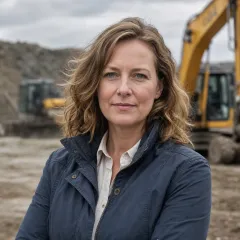
Charlotte Avery is an earth-moving machinery analyst covering excavators, mini excavators, loaders, skid steers, dozers, graders, compactors, and attachments. She uses ISO 6165 machine classification and ISO 20474-1 safety requirements while examining operating mass, rated payload, breakout force, ground pressure, stability, visibility, guarding, and attachment compatibility. Her work helps contractors and fleet buyers match machine size, undercarriage, transport limits, and protective features to terrain, duty cycle, and jobsite access.