Cone Crusher Private Label vs. Sandvik Crusher Wear Parts: A Distributor Buying Guide
-
The Cheapest Cone Crusher Private Label Quote Has Hidden Costs
-
When It Makes Sense to Choose Genuine Sandvik Mining Parts
-
A Cone Crusher Distributor Buying Guide: Questions I Ask Now
-
The Same Logic Applies to Drilling Rig Sourcing
-
When I Still Consider Private Label
-
The Objection I Hear From My Own Finance Team
If you are a cone crusher distributor buying wear parts on price alone, you are making a brand decision that you haven't fully accounted for yet. That sounds dramatic, but I have watched the same mistake cost us time, budget, and credibility. I'm an office administrator for a mid-sized aggregate company. I manage about $850,000 a year in equipment parts and related purchases across eight or nine vendors. I report to both operations and finance. What I don't do is pretend a crusher liner is the same as a box of office paper.
When I took over this purchasing role in 2020, I had to learn what experienced sourcing people seem to know already: the cheapest quote is the easiest number to see and the most expensive number to live with. I can't teach anyone metallurgy. I can tell you what happens after a wear part fails on a Friday, and why that matters more than the discount you negotiated on Tuesday.
My honest view is this: quality is not a premium feature. It is the part of the purchase that protects your customer's opinion of you.
The Cheapest Cone Crusher Private Label Quote Has Hidden Costs
I'm not against cone crusher private label options. Some are excellent, and some are honest about what they can and cannot document. But in 2021, I bought a private label liner because it was $2,100 cheaper than the genuine Sandvik crusher wear parts quote sitting on my desk. The part arrived with no heat number, no batch number, and no material test certificate. Our finance team rejected the invoice because it didn't match our purchase order requirements. The liner also did not last as long as the prior genuine one, so we paid freight to pull it out and install a replacement early. That order became a $2,400 headache that made its way through three budget meetings.
The surprise wasn't the lower price. It was how much work that lower price created. The finance rejection, the emergency freight, the internal meetings, the customer who wanted to know why their product quality had changed—none of those costs were in the original supplier quote.
I've never fully understood why documentation feels like an afterthought in some sales conversations. My best guess is that salespeople are measured on the order, while the buyer is measured later on how the order works out.
When It Makes Sense to Choose Genuine Sandvik Mining Parts
I know why buyers hesitate. A quote for genuine Sandvik mining wear parts is usually higher. You can find a cone crusher private label option at a lower figure in under an hour. The argument I make to our operations team is not about avoiding private label suppliers. It's about what the higher quote includes before the part goes into the machine.
When I order genuine Sandvik crusher wear parts, I am paying for design data that matches an actual crusher. The part number connects to original equipment geometry, known wear characteristics, and a manufacturer who has to stand behind the design. If I need a material certificate, I can request one. If I have to explain a field issue to management, there is someone on the other end who does not need permission to speak with me. I don't see any of that in a spreadsheet comparison, but I notice it when it's missing.
The other side matters too. Sandvik Mining and Rock Solutions does not promise no failures, because that would be unrealistic for any wear part. But the process around the part is a form of protection. For a cone crusher liner that can affect product quality and uptime, I want that protection behind my order.
A Cone Crusher Distributor Buying Guide: Questions I Ask Now
Distributors sometimes ask me what the secret is to choosing between private label and genuine parts. There is no secret; there is a checklist. When a supplier cannot answer these questions, I treat that as a red flag even if the price is attractive.
- Can you provide a material certificate for this exact batch? Not a generic certificate for a similar product. I want a heat number or lot traceability. That goes for genuine Sandvik crusher wear parts and private label parts alike.
- Can you show me measurement or fit data for this crusher model? Good suppliers can. They don't need the original blueprint, but they need enough data to avoid guessing.
- What is the failure procedure? If a liner chips or cracks early, who makes the call? Is it a warranty claim based on a photo, or does a representative need to inspect it?
- Who covers removal and reinstallation costs if the part fails? This is the question that changes the conversation. The price of an extra liner set is usually smaller than the cost of unplanned downtime.
- Are your compatibility claims substantiated? Per FTC advertising guidelines, any claim that a part is the same as the original equipment has to be truthful and backed by evidence. If a supplier cannot prove it, I do not want my company to be the place where that lack of evidence shows up.
The Same Logic Applies to Drilling Rig Sourcing
We are also in the middle of a drilling rig sourcing project this year. I don't pretend to evaluate rotation torque or control systems. My job is to make sure the sourcing process is strong enough. When a drill rig supplier can't show how replacement parts will be stocked, how service response is documented, or how warranty claims are handled, I do not let an impressive spec sheet convince me that the details will work out. I learned that discipline from buying crusher wear parts.
The part number may be different, but the risk profile is the same. Equipment downtime, backordered parts, and vague accountability always cost more than the initial purchase price.
When I Still Consider Private Label
Fair question: am I saying every part has to come from the original equipment manufacturer? No. I have approved independent aftermarket parts when the supplier gave me material certs, fit dimensions, and a clear warranty process. A good independent part is not a gamble. A cheap part with no documentation is.
The label on the box matters far less than the paper trail behind the part.
The Objection I Hear From My Own Finance Team
I can already hear the objection from a cost-focused manager: this is easy for an admin to say, because you don't have to explain a budget variance. Actually, I do. If I overspend on wear parts, it is my variance report. If a customer has a quality complaint because a liner wore out early, it is also my problem. I sit between operations and finance; I hear from both sides.
I'm not saying ignore price. I'm saying compare the purchase price to the risk that the supplier doesn't show up when the part fails. Most companies can absorb a slightly higher cost per liner. They can't absorb a customer that loses confidence in them.
Honestly, I'm not sure why some purchasing routines still treat the lowest quote as the winner. My best guess is that quoting software makes price easy to compare and quality hard to quantify. But hard to quantify is not the same as unimportant.
So the next time someone brings you a cone crusher private label quote that is noticeably cheaper, don't ask only what it costs. Ask what it protects—and what it doesn't. A genuine part can fail too; nothing in crushing is guaranteed. But if it fails, you can trace the part, understand the reason, and hold someone accountable. That traceability is the real product. It is what lets you walk into a customer meeting and say with confidence that your company did its job.
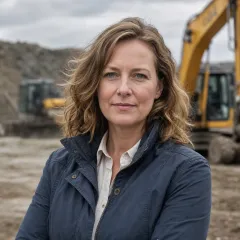
Charlotte Avery is an earth-moving machinery analyst covering excavators, mini excavators, loaders, skid steers, dozers, graders, compactors, and attachments. She uses ISO 6165 machine classification and ISO 20474-1 safety requirements while examining operating mass, rated payload, breakout force, ground pressure, stability, visibility, guarding, and attachment compatibility. Her work helps contractors and fleet buyers match machine size, undercarriage, transport limits, and protective features to terrain, duty cycle, and jobsite access.