Tier 4 Final Power Packs
Mobile crushing plants ship with EPA / EU Stage V diesel options and NOx + PM logs per serial number for site EHS files.
Sandvik jaw crushers, cone crushers and vibrating screens are selected by feed size, closed-side setting and verified t/h curves — not brochure averages. Aggregate, mining and tunnelling buyers get CSS maps, liner wear forecasts and Tier 4 Final power packs in one engineering pack.
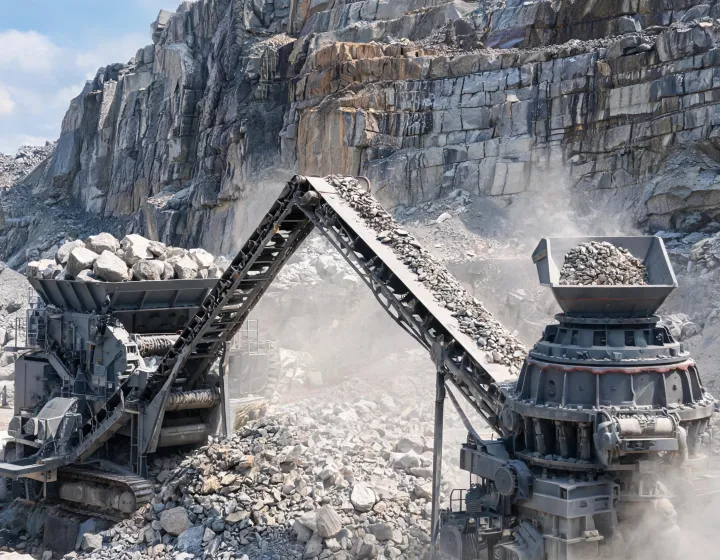
Switch tabs to compare recommended jaw opening, cone CSS, screen decks and rock-tool packages for the workflow your chief engineer actually runs. Each pane lists the hard parameters procurement managers put into tender sheets — feed size, discharge opening, vibration frequency and expected t/h under wet or dry feed.
| Primary | Jaw crusher, 900–1,200 mm feed, single-toggle |
|---|---|
| Secondary | Cone crusher CSS 19–32 mm for asphalt fraction |
| Screening | 3-deck vibrating screen, 16 / 22 / 32 mm mesh |
| Target | 350–800 t/h dry limestone circuit |
| Primary | Heavy-duty jaw, manganese liner package |
|---|---|
| Secondary | Cone crusher CSS 13–25 mm, high-throw |
| Tertiary | Impact crusher option for cubical product |
| Target | 500–1,200 t/h hard-rock plant |
| Rock tools | Top-hammer / DTH bits matched to UCS |
|---|---|
| Muck crush | Compact jaw + screen train for spoil |
| Vibration | Screen RPM tuned for wet muck cake |
| Docs | ISO 21873 plant safety pack |
| Primary | Impact crusher with magnetic separation |
|---|---|
| Screening | Scalping + fine decks for RCA fractions |
| Wash | Optional sand washing machine module |
| Target | 150–400 t/h urban C&D plant |
Six specification-led advantages that procurement managers and mechanical engineers verify during factory acceptance and first-month production audits.
Mobile crushing plants ship with EPA / EU Stage V diesel options and NOx + PM logs per serial number for site EHS files.
Cone and screen hydraulic packs leave the factory at 18/16/13 cleanliness with sample bottles for on-site trending.
Cone crusher CSS versus product curve sheets are re-validated on the Sandvik test bench before every major liner revision.
Jaw and cone liner kits are staged against abrasive index forecasts so quarry planners schedule swaps before t/h collapses.
Undercarriage-free crushing fleets still need manganese, bearings and screen cloth — regional hubs target sub-18h MTTR.
Mobile plant cabs meet ISO plant-safety envelopes with cab noise targets under ISO 6395 measurement methods.
Typical jaw + cone + screen trains: 16–20 weeks ex-works including foundation drawing review, plus a 7-day commissioning audit that locks CSS, screen RPM and conveyor tonnage meters against the purchase order.
Yes — regulated market packs ship Tier 4 Final / Stage V with DPF + SCR aftertreatment. Emissions sample logs follow ISO 8178 C1 cycle language for project EHS officers.
Liner-only kits usually land near 12–18% of new-chamber list when abrasive index and CSS history are shared. Full chamber rebuilds with eccentric bushings are quoted after a wear-survey scan.
Contracted sites inside our quarry-belt coverage target mean-time-to-repair under 18 hours, with manganese and screen cloth pre-staged when the service plan includes predictive liner rotation.
Factory target is ISO 4406 18/16/13. On-site sample kits and trend charts are included in Tier-2 aggregate service plans so reliability leads can prove fluid health before warranty disputes.
Yes — for Mohs ≤ 9 limestone with wide feed, jaw remains the durable primary. When asphalt cubicity drives the tender, a primary jaw plus impact secondary often beats a pure impact primary on wear cost.
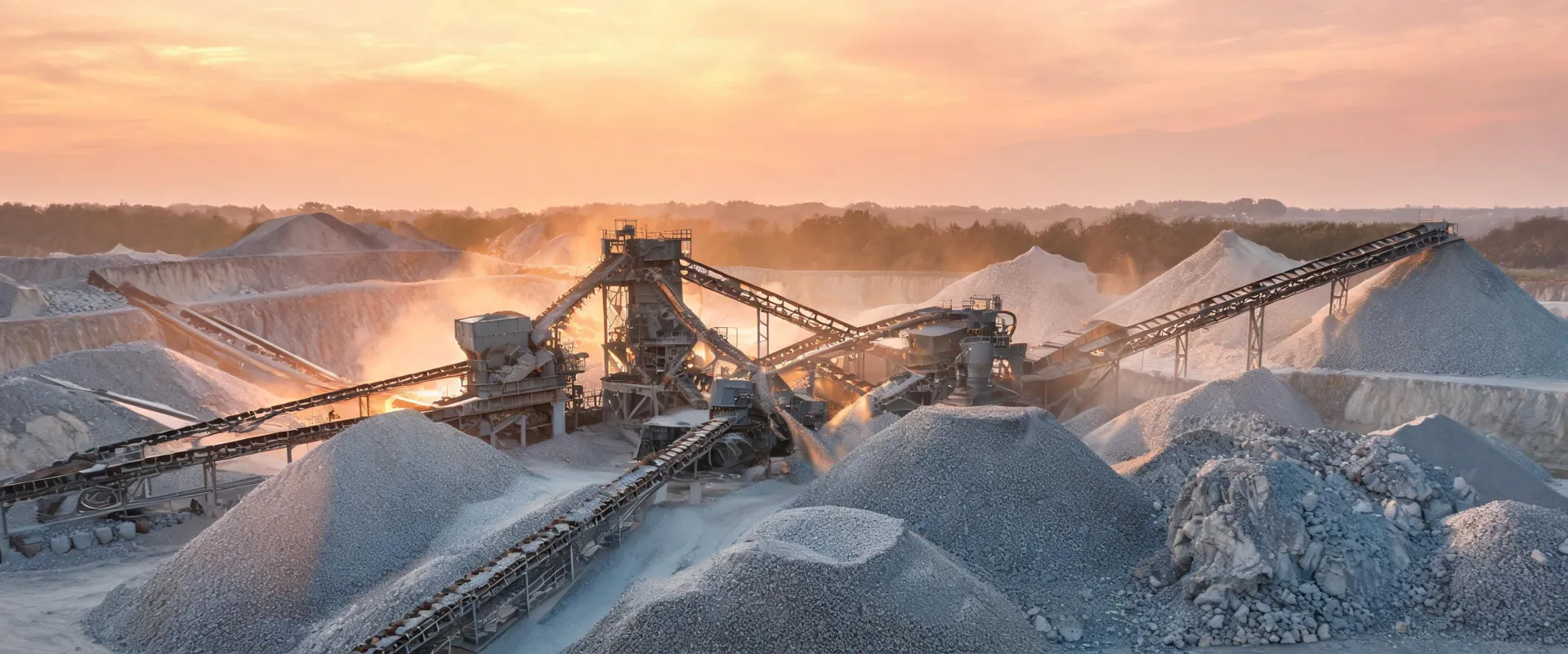
Concept-to-commissioning support across jaw, cone, impact, screening and rock-tool fleets for aggregate and mining operators.
Talk to a Crushing Engineer