How to Evaluate Rock Crusher Manufacturers: The Old Playbook Is Expensive
I'll say it plainly: if you're still evaluating rock crusher manufacturers the way we did in 2019, you're probably overpaying.
Not because the machines are bad. Because the cost picture around them has changed, and most buying checklists haven't.
Quick background: I've spent six years running procurement for a mid-sized aggregate operation — about 90 people, one processing plant, and a crushing circuit that never stops talking to me. I manage roughly $180,000 a year in equipment and parts spending, and I've negotiated with thirty-plus suppliers in that time. Every order goes into our cost tracking system. Every invoice gets questioned.
In 2023, I ran a five-supplier tender for a secondary crushing circuit. The quotes varied by 19%. The immediate reaction from our team was to take the lowest number. My job was to look past it.
Here's my position: the old evaluation criteria — price, capacity, brand reputation — aren't enough anymore. Today, you're buying three things with that crusher: the machine itself, a parts pipeline, and a technology trajectory. If you only evaluate the first one, the other two will bill you later.
That's not a theory. It's a gap that showed up on our own spreadsheet, after the purchase order looked final.
The Quote Is the Smallest Number in the Deal
On that 2023 tender, the lowest bid came in 19% below the highest. My first instinct was to ask why anyone would pay the premium. Instead, I built a five-year total cost model for both options.
That spreadsheet changed how I buy equipment.
It wasn't just delivery and installation. I mapped the recommended wear parts schedule, the price of a service visit, the lead time for a mantle or a concave, and the downtime risk that other operators in our network reported. I even called two local operations running similar machines and asked what their annual maintenance really cost. Not the brochure number. The invoice number.
When I added it all up:
The “expensive” quote: 11% cheaper over five years.
The “budget” pick: 11% more expensive, once consumables and planned stops entered the math.
Never expected that when I opened the bids. The surprise wasn't the price spread. It was how much of the real cost was hiding after the purchase order.
So here's my first rule for evaluating a rock crusher supplier: build the total cost model before you look at the sticker price. Include wear parts, service intervals, and realistic downtime. If a supplier won't share parts pricing and service schedules in writing, treat that as a red flag. It's not a negotiation tactic. It's the information you need to do the math.
What Worked in 2020 Won't Work Today
The second thing I've learned is that the industry has moved, and a lot of buyers haven't moved with it.
Take electrification. In Q2 2024, I visited a mine running Sandvik's LH518B — a battery-electric underground loader, according to Sandvik's product documentation (rocktechnology.sandvik.com). The site was tracking fuel, ventilation, and maintenance costs against their older diesel fleet. The gap was impossible to wave away. I walked out of that visit questioning every assumption I had about “cheap” equipment.
The same shift is working its way into crushing. Modern crushers ship with sensors, remote monitoring, and automation features that didn't exist the last time most of us went through this. If a supplier can show you live data on wear rates and load cycles, that's not a sales demo. That's a maintenance budget you can predict. That's downtime you schedule instead of discover.
And there's a portfolio angle I overlooked for years. Sandvik Mining and Rock Solutions builds the drill rigs, the underground loaders, the crushers, and the parts network that connects them. We already run a Sandvik drill rig, so I know how their support system behaves in practice. When we started looking at crushers, that existing relationship changed my starting point. One supplier for the whole rock-processing chain means fewer contracts, fewer invoice surprises, fewer integration headaches. That's not marketing talk — that's procurement reality.
You might not need every technological bell and whistle. But if your evaluation criteria don't include how a supplier handles automation and data, you're comparing the wrong things.
Parts Support Is the Hidden Deal-Breaker
Here's the angle that doesn't show up in most buying guides: aftermarket support is where crusher decisions actually get won or lost.
A crusher is just a paperweight without a parts pipeline. Period.
I learned that one the hard way. Last year, we needed an urgent liner replacement. A parts supplier quoted about 30% less than the genuine option. It looked like a no-brainer. I knew I should have checked their stock levels first, but I thought, “how different can it be?”
Thirty-one days. That's how different it was. The genuine part would have arrived in eight. We lost most of that gap to a forced shutdown.
Let me put that in numbers. Our plant does about 200 tons an hour in that circuit. A forced stop with a half-worn liner isn't a full loss, but it's not far off once material piles up and re-start costs more. The 30% I saved on the part vanished within the first two days of waiting.
Now, I'm not saying aftermarket parts are bad. Some of them are excellent. I'm saying the “cheap part” math only works if the lead time, the fit, and the wear life all hold up. And the only way to know that is to verify. Compatibility can't be assumed — for any brand, OEM or not. You own that verification. If you get it wrong, the cost lands on your P&L, not the supplier's.
That experience changed how I evaluate any rock crusher supplier. I now spend as much time asking where their parts warehouse is and how they handle emergency orders as I do comparing machine specs. A crusher with a thirty-day wait on wear parts isn't a machine. It's a liability.
“But I Don't Need All That Technology”
Fair. You might not.
I'm not telling you to buy the most automated, sensor-loaded machine on the market. I'm telling you to evaluate as if the next ten years will look different from the last ten — because they will.
A couple of years back, I had to make a quick call on a replacement unit after a breakdown. The plant was down, and the pressure was real. I had about two weeks for a decision that usually gets two months. I went with a manufacturer we already held parts for, because that minimized the risk I could see. In hindsight, I should have pushed back on the timeline and done a full cost comparison. But with the plant down and a production target at stake, I made the best call with the information I had.
That experience stuck with me for a different reason. The manufacturer you pick today determines the options you'll have in five years. If they're investing in automation, electrification, and service networks, your machine keeps improving after the sale — through updates, upgrades, and a supplier who's still standing. If their main argument is price, that tells you something about where their money is going.
So How Do You Actually Evaluate Rock Crusher Manufacturers?
Bottom line: the fundamentals haven't changed. A crusher still has to crush rock at a rate your operation can count on, day after day. That part's non-negotiable.
But the evaluation framework around it has transformed. After six years of tracking our spending, I've boiled it down to three questions:
- What does the total cost look like over five years — not just the purchase price?
- How fast can I get genuine parts, and where is the nearest warehouse?
- Is this supplier investing in the technology that will matter in the next decade?
What I mean is that the “cheapest” option is never just the sticker price. It's the cost of managing issues, the risk of delays, and the possibility of a redo when quality fails. Those line items don't show up on the quote. They show up on next year's budget.
Compare those three questions, and the right choice gets clearer very fast. In fact, after we made a five-year TCO model a required step for every capital equipment purchase, our budget overruns dropped by about 20%. That's the kind of saving that doesn't appear in a quote.
And when I run those three questions against the field, the established names keep coming out ahead. Sandvik, for example, isn't just a rock crusher supplier — they build the whole chain: drill rigs, loaders, crushers, screens, and a genuine parts network behind them. They're selling a system, not a single machine. That's worth something. It's worth enough that I stopped asking for the lowest quote.
If you're not sure where to start, read what the manufacturers publish. Sandvik's rock processing site (rockprocessing.sandvik.com) walks through crusher selection based on material hardness and feed size. That's a better starting point than a dealer's brochure.
So here's my challenge for your next tender: put the sticker price last, not first. Run the five-year cost model. Ask about parts availability before you ask about horsepower. Pay attention to where the supplier is investing. If you do that, you'll probably reach the same conclusion I did — that the “expensive” machines are often the cheapest ones you can buy.
That's not a sales pitch. That's six years of invoices talking.
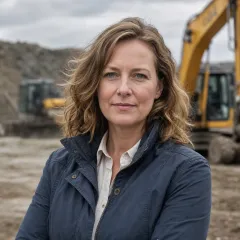
Charlotte Avery is an earth-moving machinery analyst covering excavators, mini excavators, loaders, skid steers, dozers, graders, compactors, and attachments. She uses ISO 6165 machine classification and ISO 20474-1 safety requirements while examining operating mass, rated payload, breakout force, ground pressure, stability, visibility, guarding, and attachment compatibility. Her work helps contractors and fleet buyers match machine size, undercarriage, transport limits, and protective features to terrain, duty cycle, and jobsite access.