19 of 64 Liners Failed: The $31,400 Lesson That Changed How I Buy Bulk Crusher Parts
-
The Budget Pressure That Led to a Bad Call
-
Why "Same Foundry, Same Steel" Misses the Point
-
The Actual Invoice for the 64-Liner Order
-
The Rock Drill Incident That Almost Became a Safety Report
-
The Checklist That Caught 47 Problems in 18 Months
-
What I'd Tell Anyone Evaluating Rock Drill OEM vs Private Label Now
Let me start with the number that still bothers me: $31,400.
That's what 64 bulk cone crusher liners ended up costing us in September 2022. Not the purchase price—that part was a "great deal." The $31,400 includes what happened when 19 of those liners failed within six weeks of installation.
I've been handling spare parts and wear parts orders for a mid-sized quarry operation for nine years. In my first year (2017), I made the classic mistake of ordering from the cheapest quote without checking lead times. That cost a week of downtime. In total, I've personally made and documented 11 significant purchasing mistakes, totaling roughly $180,000 in wasted budget. I'm sharing the most expensive one because if you're searching for "rock drill OEM vs private label" or pricing out a bulk crusher order, you're probably standing where I stood in 2022.
The Budget Pressure That Led to a Bad Call
The decision didn't start with a shady salesperson. It started in a budget review. Our ore blend had more chalcopyrite than the mine plan predicted, and the cone was chewing through liners faster than anyone forecast. The operations manager wanted a stockpile of spares. My parts budget didn't stretch that far.
Then the aftermarket supplier rep showed up with a pitch I've heard a hundred times since: "We work with the same foundries, same steel grades, same heat treatment. You're paying for the brand name." The price came in roughly 30% below the OEM quote. When I compared the published chemical composition and hardness specs, they matched line by line.
So I did what most of us do in that situation. I talked myself into it. The spec sheet looked identical. The numbers were within range. The only thing I didn't check was what the spec sheet didn't say.
Why "Same Foundry, Same Steel" Misses the Point
Here's what I understand now, after breaking more liners than I care to admit. A cone crusher liner has one job: crush rock and wear down predictably. But the difference between a liner that lasts 2,000 hours and one that fails at 300 hours comes down to three things that never appear on a sales sheet.
- Alloy chemistry. Manganese steel specs list acceptable ranges, not exact values. A liner at the bottom of the carbon range work-hardens differently than one at the top. The sheet says both are "within spec." The crusher can tell the difference.
- Heat treatment consistency. Quench and temper cycles determine microstructure. A foundry with tight process control produces uniform parts. One with loose control produces a batch where every liner is slightly different—and the ones that miss are the ones that crack under load.
- Chamber geometry. Even a few millimeters of deviation changes the crushing zone, throughput, and product shape. One bad liner is an annoyance. A bulk order of them is an inconsistency engineered into your entire circuit.
The "private label is just as good" thinking comes from an era when aftermarket foundries used the original tooling and ran the same release testing as the OEM. That was true twenty years ago. Back then, some aftermarket brands genuinely produced parts indistinguishable from the original—because they literally were the original, cast on the same lines. That era ended as cost pressure pushed foundries to consolidate and outsource production to lower-cost facilities. The drawing might be the same. The process behind it often isn't.
Don't hold me to the exact percentage—I haven't seen a rigorous industry-wide study—but in our own maintenance records, the premature failure rate on unverified aftermarket wear parts was dramatically higher than on genuine components. The point isn't that private label parts are always bad. The point is that you're not just buying a liner. You're buying the verification data that says it will perform.
The Actual Invoice for the 64-Liner Order
The first failure showed up as a hairline crack during a routine inspection. Then we found a second. Then the fitters started finding them faster than they could log them. Nineteen of the 64 liners came out of service inside six weeks.
Here's what the "savings" actually cost:
- $9,600 — the purchase price of the 19 failed liners, scrapped
- $14,800 — replacement liners from the authorized Sandvik dealer, expedited after I admitted the mistake
- $4,200 — double handling: crane time, fitters, and supervision for two swap cycles (I'm not 100% sure of this figure—they pulled it from maintenance records, but it's close)
- Three days of reduced crusher throughput while we re-swapped the failed pieces
When we ran the cost per ton numbers after all the rework, the private label experiment wasn't just neutral—it was negative. The original quotation showed a 30% line-item saving. The all-in result was roughly 18% more expensive than buying genuine from the start. I keep that spreadsheet on my desktop as a reminder that price per piece and cost per ton are two different numbers.
The numbers on paper were bad enough. The conversation with the operations director was worse. He didn't raise his voice. He just stood at the crusher platform, looked at the stack of cracked liners, and said, "This didn't happen with the old supplier."
That was the moment I understood that output quality is a brand signal. Every cost-conscious parts decision I made showed up in the reliability of our production and the confidence of our clients. The $50 difference per liner translated into a credibility hit that took months to repair.
The Rock Drill Incident That Almost Became a Safety Report
The liner failure was expensive. The rock drill failure was scarier.
Hydraulic rock drills are precision machines. The clearance between piston and cylinder is measured in microns, and the shank adapter handles impact and rotational torque thousands of times per minute. It's a part where "close enough" isn't a thing.
In late 2023, we trialed private label shank adapters on one drill rig—a 40% price difference from the OEM part. The supplier showed me a steel mill certificate with hardness numbers that matched the OEM spec. The salesman knew his story. I didn't know to ask about heat treatment records.
Two of the six adapters lost temper in high-load sections, developed hairline cracks, and one nearly failed underground. A sharp shift supervisor caught a wobble in the drill rod and stopped the rig before it became a reportable incident. So glad he did. We were one shift away from a component failure at full impact—the kind that puts people in the hospital, not just numbers on a P&L.
That near-miss changed how I think. "Rock drill OEM vs private label" stopped being a procurement question and became a risk-management question. Risk questions rarely answer well to a discount.
What you're paying for with a genuine rock drill part isn't just the steel. It's the design validation, the batch release testing, and the traceability back to a specific production line. When a part fails, the OEM can tell you exactly which batch it came from and what testing it passed. That audit trail has real value.
The Checklist That Caught 47 Problems in 18 Months
After the third parts-related failure in Q1 2024, I finally built the process I should've had from day one. It's not complicated, which is the embarrassing part. It's a pre-order verification checklist:
- Ask for the batch heat number and, where practical, a sample for independent hardness testing before committing to bulk quantities.
- Ask whether the supplier has an in-house QA lab or outsources testing. The answer tells you more than the certificate.
- Require a warranty that covers the first 300 operating hours. If a liner is going to fail, it typically fails early. A supplier who won't stand behind that window is telling you something.
- Compare total cost per ton, not price per piece. Genuine parts bought through Sandvik mining equipment channels usually look more expensive on the invoice and cheaper on the cost-per-ton report. I've verified this repeatedly in our own data.
- For critical wear parts, buy through an authorized channel. Use the Sandvik dealer locator to find your regional distributor. The traceability and batch documentation are part of what you're paying for.
We've caught 47 potential errors with this checklist in the past 18 months. Most were small—wrong part numbers, quantity mismatches, a supplier who couldn't produce a heat number. But one near-miss was the same private label liner scenario that burned us in 2022. The checklist flagged the missing documentation before we issued the purchase order.
The point of the checklist isn't to ban aftermarket parts. It's to make sure someone, somewhere, has verified what a part claims to be. If the supplier can prove it, we'll consider it. If they can't, we don't.
What I'd Tell Anyone Evaluating Rock Drill OEM vs Private Label Now
I'm not going to tell you private label parts are always wrong. There are non-critical applications where verified aftermarket components make sense, and I've used them myself. What I'll tell you is this: make the decision based on verification, not on the price gap.
Ask for the documents. Check the batch numbers. Run the cost-per-ton calculation against your own data. And if the supplier can't provide traceability for a bulk cone crusher liner order—or if the savings evaporate once you factor in the risk—do not let the discount make the decision for you.
The genuine parts we buy now cost more upfront. But I've stopped explaining cracked liners to site managers. I do not have to wonder whether a rock drill adapter will hold up underground. After nine years of documenting my own expensive education, that predictability is worth more than the margin.
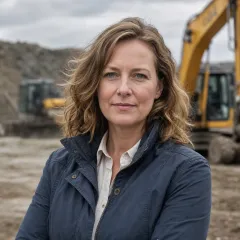
Charlotte Avery is an earth-moving machinery analyst covering excavators, mini excavators, loaders, skid steers, dozers, graders, compactors, and attachments. She uses ISO 6165 machine classification and ISO 20474-1 safety requirements while examining operating mass, rated payload, breakout force, ground pressure, stability, visibility, guarding, and attachment compatibility. Her work helps contractors and fleet buyers match machine size, undercarriage, transport limits, and protective features to terrain, duty cycle, and jobsite access.