What to Look for in a Bulk Drilling Rig Supplier: A Procurement Manager's Guide
Ask five supply managers what to look for in a drilling rig supplier and you'll get five different answers. Some start with hydraulic power, some with cab comfort, some with brand recognition. After seven years as a procurement manager at a 220-person drilling company, I've learned that the most useful answer starts with a different question: what kind of purchase is this?
A bulk drilling rig is not a commodity. It's a long-term relationship with an aftermarket system, and the total cost of that relationship is usually much larger than the invoice on the machine. That's why I now sort every rig evaluation into one of three situations before I open a spec sheet.
According to Sandvik Mining and Rock Solutions product documentation, a bulk drilling rig is defined by its operating envelope—hole diameter, feed travel, and rock drill power, among other parameters. That envelope should be easy to find. If a supplier wants you to choose on price before it shows you the envelope, I treat that as a red flag.
Here are the three situations I use, and what to look for in a drilling rig supplier inside each one.
1. You're Adding to an Existing Sandvik Fleet
If you already run Sandvik equipment, your first filter should be compatibility. Ask how the candidate unit compares with the rigs you own. I'm not talking only about wheelbase and weight; I'm talking about drill string sizes, transport feed length, shank adapters, and service tools. Then ask the sales engineer to show you the relevant pages of the rock drill catalog. A catalog with clear part numbers and specifications makes the compatibility check possible.
I once went back and forth between a higher-output drill and a model that shared parts with our existing fleet for nearly two weeks. On paper, the higher-output drill offered better penetration. But when I added new drill rods, different shank adapters, and an extra parts bin to the cost model, the advantage disappeared. I chose the compatible model and never regretted it.
When you are evaluating a Sandvik rig, include the rest of your process in the conversation. If your plant also operates Sandvik cone crushers, ask the support organisation to quote Sandvik cone crusher parts alongside the rock drill spares. A late crusher liner can idle a plant even when the drill fleet is running perfectly. Receiving one quote with verified part numbers, material grades, and lead times makes your job much easier than assembling it from three vendors. It also exposes hidden differences in aftermarket service culture.
In this scenario, the key phrase is standardisation. Every part number you can share across machines is a part you don't need to stock twice.
2. You're Buying on a Blank Sheet
The second situation is a greenfield site, a new plant, or your company's first bulk drilling rig. You have no installed base to standardise around, so you need a supplier that can engineer the match to your rock type, bench height, and production target.
This is where the rock drill catalog becomes your most valuable document. A serious catalog lists impact energy, operating pressure, rotation speed, shank dimensions, lubrication requirements, and maintenance intervals. That level of detail is not optional if your maintenance planners need to set a service schedule. Sandvik's product literature contains this type of information for its mining equipment, and I expect any credible supplier to do the same.
My counterintuitive advice for blank-sheet buying: do not choose the machine with the highest maximum penetration if it is also the machine that requires the least familiar service routine. You can survive a little less speed. It is much harder to survive a critical part that must be shipped from across the world while your new pit sits idle.
Build a starting stock list from the catalog before you sign the purchase order. A reputable drilling rig supplier should be able to name the items likely to be needed in the first year. If their answer is a shrug, that tells you more about the relationship than any marketing presentation ever will.
3. You're Replacing a Production-Critical Rig on a Fixed Schedule
The third situation is the one where time certainty becomes a cost line, not just a preference. When a rig failure threatens the blast plan, or when the permit window only gives you a limited season, a cheaper quote with a vague lead time is an expensive quote wearing a mask.
In March 2024, we had to replace a unit after an unplanned failure in the middle of our drilling season. One bid was roughly $40,000 lower than the other. The lower bid estimated delivery in 14 weeks. The higher bid confirmed a shorter delivery schedule and named the components that would be included in the first shipment. We paid the premium. The difference between the two bids was less than two days of lost production once the crew and drill field were already in place.
That is the certainty premium. It's not paying extra for speed. It's paying for a commercial commitment, for a documented commissioning plan, and for a supplier that has already thought about what happens after the handover.
When you are in this scenario, put delivery and parts availability into the contract. Ask for the supplier to confirm its lead time in writing and to identify any items it will ship with the machine. A quote without a schedule is just a number.
What to Look for in a Drilling Rig Supplier: The Cost Controller's Scorecard
Once I know which situation I am in, I apply the same scoring system to the candidates. The categories are stable even when the weights change.
- Spec completeness: The supplier provides a rock drill catalog and product data that allow an engineering review, not just a sales comparison.
- Parts availability: Critical wear parts and service parts can be sourced quickly. The supplier can identify where each part is stocked.
- Service support: Maintenance schedules, torque specifications, and troubleshooting guides are documented and accessible.
- Commercial clarity: Lead times, freight, optional extras, and commissioning responsibilities are in writing.
- Total cost of ownership: My model includes acquisition cost, installation, training, consumables, planned maintenance, and the financial risk of production delay.
How do you decide which scenario applies to you? Ask yourself these questions:
- Do you already own Sandvik rigs, or do you stock Sandvik drilling parts? Start with Scenario 1 and make compatibility the dominant criterion.
- Is this a new operation or a first machine with no installed base? Start with Scenario 2 and make technical support the dominant criterion.
- Is this replacement tied to a date that affects revenue, such as a blast schedule, plant restart, or weather window? Start with Scenario 3 and make certainty the dominant criterion.
The best supplier decision is usually not the lowest quote. It is the one that keeps your rock production moving without exposing you to hidden costs and late deliveries. The catalogue tells you what they sell. The parts plan tells you how they will support it. The contract tells you whether they understand your timeline. Use all three.
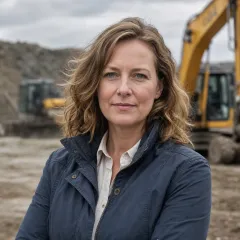
Charlotte Avery is an earth-moving machinery analyst covering excavators, mini excavators, loaders, skid steers, dozers, graders, compactors, and attachments. She uses ISO 6165 machine classification and ISO 20474-1 safety requirements while examining operating mass, rated payload, breakout force, ground pressure, stability, visibility, guarding, and attachment compatibility. Her work helps contractors and fleet buyers match machine size, undercarriage, transport limits, and protective features to terrain, duty cycle, and jobsite access.