Small Orders, Big Stakes: What 12 Years of Emergency Parts Taught Me About Sandvik Mining Service
I'm the emergency parts coordinator for a Sandvik distributor in Southern Africa. I've processed 300+ rush orders in 12 years. And I've learned that small mining operators get shafted too often, and that's a mistake. Not just for them. For you. Because the cost of treating a small order badly isn't just the $2,000 invoice you lose. It's the $200,000 relationship you never see.
To be clear, I'm not talking about a boutique service for niche customers. I'm talking about a bulk drilling rig or a crusher liner. When the drill stops, the mine stops. The operator's heart stops. Size doesn't matter. That's what I tell every trainee who walks into our parts office.
A Thursday That Still Bugs Me
In March 2024, a family-owned aggregate operation called at 11 AM on a Thursday. The jaw crusher had thrown a toggle plate. They had no spare. Our normal lead time for genuine Sandvik jaw crusher parts was 10 days. They needed it by Saturday night, or a commercial contract with a concrete producer was at risk. The owner's voice was shaky.
We found the part in a warehouse 500 miles away. We paid $800 for a courier, on top of the $1,400 part. The owner offered to pay anything. We didn't overcharge him. The part arrived at 5:45 AM Saturday. The fitter installed it before the morning shift. The owner called Monday to say thank you. That call was short. But it stays with you.
The same week, a multinational cement company called about a screen deck for their second-line crusher. They had a spare, a maintenance crew, and a buffer. Their problem was annoying. The small guy's problem was existential. And yet our industry's response structures are built for the big guy. That's backwards.
Small Orders, Big Loyalty
I don't have hard data on industry-wide response times by customer size. I wish I had tracked that. What I can say anecdotally is that the calls we get from small operators usually start with 'I've tried three suppliers and none of them called me back.' That's not a pricing problem. That's a respect problem.
The surprise wasn't that the small order paid less. It was how much loyalty it generated. That quarry owner told the Sandvik mining rep about us. He told three local contractors. He told a geologist who visits half a dozen mines. We lost $800 on freight that day. Over 18 months, that account sent us more than $300,000 in orders, including a complete wear package for both crushers. Is that typical? No. Is it possible? More often than you'd think. Most of our 300+ rush orders are between $500 and $15,000. Only a few become seven-figure accounts. But those few pay for the rush lane several times over.
(I should add that we've also failed. In 2022, a medium-sized mine asked us to expedite a set of liners with a three-day lead. We missed it by one day, and they didn't make a fuss. Six months later, they moved their annual consumables contract to another supplier. The five-year value of that account would have been $1.8 million. That's when we implemented our 48-hour buffer policy.)
Why the Cost Argument Falls Apart
This is the most common objection: 'Small orders have lower margins, so it's rational to deprioritize them.' Let me rephrase that: 'Our process is too expensive to handle small orders, so we make the customer pay for our inefficiency.' The actual difference in processing time between a $500 order and a $50,000 order is maybe 20 minutes. The parts are the same in the warehouse. The courier is the same. The technical verification is the same. The only thing that changes is the invoice value. To be fair, if a supplier uses manual paperwork and requires a manager call for every order, small orders do cost as much. But that's a process problem, not a customer problem.
We created an emergency lane. Pre-approved courier contracts, automatic stock checks across warehouses, and a clear definition of what counts as an emergency: an actual breakdown, a risk of environmental damage, or a safety-critical function. Planned maintenance doesn't qualify. That's not discrimination. It's prioritization. And it applies to every customer, from the small quarry to the global miner.
Bulk Drilling Rigs, Crusher Distributors, and the Same Blindspot
People assume this is only about parts. It's not. A bulk drilling rig is a million-euro decision. The buying process is complex, and the aftermarket support package should be part of the evaluation. I've seen a drilling rig supplier evaluation stall because the team only checked the drill's technical specs—drill meter, diameter, etc.—and neglected to test the response time on a single spare part. The rig arrived on time. The first parts order took 11 days. The customer's conclusion was simple: you know the machine, but you don't support it.
Not long ago, a contractor in West Africa called about a filter kit for a Sandvik drill. Their original supplier had promised five days; eight weeks later, they still didn't have a coherent answer. We sent the kit overnight. It wasn't a huge sale. But two months later, when they needed to source a complete bulk drilling rig, they called us first.
The same logic applies to a crusher distributor. When you're writing a buying guide for crusher distributors, don't just compare prices and brands. Call them on a Tuesday and ask for a quote on a single liner with a two-day delivery. See what happens. If they hesitate, that's your answer. Because the day your crusher is down, you'll need urgency, not charm.
According to Sandvik's published specifications (rockprocessing.sandvik.com), even a mid-sized underground drill has options that change the way it should be dispatched and serviced. You can't short-change the pre-service checklist just because the order is small. The technical complexity doesn't depend on the invoice value. And the same principle is echoed in ISO 9001 (iso.org), which requires a process for reviewing product requirements and being clear about what you can deliver.
The Objection You're Probably Raising
You're thinking: 'There are customers who abuse this. He's asking for next-day service for a planned need.' I get that. I've seen that too. The fix is the definition of emergency. If a customer books a shutdown maintenance window six weeks in advance and expects us to stock a unique spare with no notice, that's not an emergency. That's poor planning. We politely offer the standard lead time. Nobody gets the fast lane based on order size. The lane is based on the risk to the operation.
Another objection: 'This only works in developed logistics networks.' Fair. Some of our customers are sites with a dirt airstrip and a weekly truck. We can't physically get a part there in two days. What we can do is be honest about the lead time and work with them on buffer stock. A small customer deserves the same honest forecast as a large one. Period.
The Standard I Use
So here's my final point. If you're a small mining operator, don't accept being treated like a nuisance. You are the person who will call someone at 2 AM when this machine stops. You deserve a supplier who answers. And if you're a supplier, ask yourself: what happens when the small order arrives? If your answer is 'we'll handle it', then the system is wrong. The only thing that should matter is whether the customer's problem is urgent, and whether you can help. Order size is irrelevant. Simple. That's the standard I use, and it's done our business no harm at all.
Prices and examples are based on our experience as of 2026. Verify current lead times with your Sandvik service center.
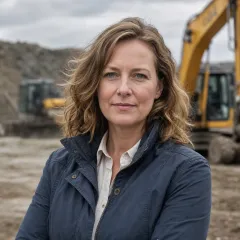
Charlotte Avery is an earth-moving machinery analyst covering excavators, mini excavators, loaders, skid steers, dozers, graders, compactors, and attachments. She uses ISO 6165 machine classification and ISO 20474-1 safety requirements while examining operating mass, rated payload, breakout force, ground pressure, stability, visibility, guarding, and attachment compatibility. Her work helps contractors and fleet buyers match machine size, undercarriage, transport limits, and protective features to terrain, duty cycle, and jobsite access.