Sandvik Cone Crusher Catalog: CH vs CS - A Crusher Specification Guide
If you're evaluating Sandvik mining or Sandvik aggregate equipment and you've opened the cone crusher section of the catalog, you're probably doing the same thing I do: reading spec sheets and trying to predict which option will cost less over ten years.
I've been on the buying side for about eight years, managing a seven-figure equipment and wear budget for a 120-person aggregate producer. Every order goes into our cost tracking system. I don't design crushers; I pay for them, track them, and explain to management why the 'cheaper' option wasn't always cheaper. So this isn't a product tour. It's the way I read a cone crusher catalog when my own budget is at stake.
This guide compares two Sandvik cone crusher families: the CH line and the CS line. Both are solid machines, but they answer different questions.
The comparison that matters is not which model has the bigger number. It's which specification makes financial sense in your plant.
Start With the Right Comparison Framework
Open any Sandvik cone crusher catalog and you'll see familiar rows: model, feed opening, closed side setting range, motor power, capacity, weight. A spec sheet is not a recommendation. It gives you the range of what a crusher can do under specific conditions. It doesn't tell you what it will do with your feed, your operators, or your maintenance schedule. (Which, honestly, is where decisions go wrong.)
The CH series is Sandvik's hydraulic cone crusher line, with active adjustment and optional automation. The CS series is the more traditional, simpler cone design—closer to the classic Symons-style machine that many older plants already run. In a crusher specification guide, they look similar. In the field, they behave differently.
I compare them on four dimensions: throughput, automation, maintenance and rebuild cost, and plant integration.
1. Throughput: the number that tells the least
Both CH and CS models list a nominal capacity in the catalog. What most people don't realize is that those numbers assume a specific closed side setting, feed bulk density, and gradation. Change any one of those, and the actual throughput changes.
I made this mistake once. A machine looked like it could produce 30% more than the one it would replace. In the actual quarry, with dry dusty feed and a tight product spec, the advantage was maybe half that. (Not that the machine was bad—it's that the catalog couldn't know our feed.)
So the honest conclusion here is deliberately boring: ignore the single capacity number, and compare the operating ranges. CH models tend to have a wider hydraulic adjustment range. CS models are more traditional, but that doesn't make them unproductive when the feed is consistent.
2. Automation: where the quiet savings live
This is the biggest practical difference between the CH and CS lines. CH crushers can be specified with automation that adjusts settings, monitors pressure, and helps protect the crusher from overload. CS crushers are simpler. That simplicity is either an advantage or a limitation, depending on who runs the plant.
From my cost tracking, the automation debate is about predictability more than features. If your feed is inconsistent, automation reduces the chance of an overload event that stops the plant. A 30-minute stoppage at 200 tons per hour is roughly 100 tons of lost production. That adds up pretty quickly.
But automation also means more sensors, software, and things to troubleshoot. If your maintenance team is already stretched, a simpler CS machine might be the lower-risk choice.
My conclusion: CH wins when feed variability causes downtime. CS wins when you have experienced operators and a stable process.
3. Maintenance and Rebuilds: the real cost gap
Here's something vendors won't tell you: the first liner quote is almost never the lowest cost per ton. This is where my value-over-price stance kicks in.
Let's use an example from a comparison I ran recently. The exact numbers don't matter; the logic does.
- Option A: liner set costs $8,000 and lasts 450 hours.
- Option B: liner set costs $6,800 and lasts 320 hours.
If the crusher is producing 220 tons per hour, Option A costs about $0.081 per ton of wear. Option B costs about $0.097 per ton. The cheaper liner is roughly 20% more expensive to operate. And that's before counting the labor cost of changing liners more often.
I built a simple wear-cost spreadsheet after getting burned on hidden costs twice. It forces me to compare every quote the same way. Is the liner price lower? Fine. But what is the expected wear life at my closed side setting? What is the changeout labor cost? What is the downtime cost per hour? Those lines often tell a different story than the quote.
When I audited our 2023 wear spending, liner price was not the main driver of cost per ton. Changeout labor and downtime were. That was a wake-up call.
This is not a Sandvik vs aftermarket parts argument. I've tested both genuine Sandvik parts and independent liners over the years. Some aftermarket parts are very good. But the only way to make a smart decision is to track wear cost per ton, not invoice price. Sandvik's genuine parts network also matters when a crusher goes down. I've waited for a critical liner from a third-party source and it arrived late. (Not that this is always the case, but supplier response time is part of the cost equation.)
On rebuilds, CS crushers have a reputation for long mechanical life cycles, which matters to a cost controller. CH crushers often make service faster: hydraulic adjustment, easier setting changes, and less need to open the crusher for routine checks. In the catalog, that shows up as service notes and weights. In my records, it shows up as hours saved.
4. Plant Integration: where budgets go to die
I've seen more budget mistakes made in integration than in crusher base price. The catalog gives dimensions and weight. It doesn't tell you whether the new crusher fits your existing conveyors, chutes, and foundation. Installation cost can vary more than people expect.
In one project, the machine with the higher quote was actually cheaper to install because it fit the existing structure. The lower quote needed new platforms and conveyor rework. We would have saved money on the quote and spent more on the installation. (Surprise, surprise.)
Before you approve a crusher, ask for installation drawings, foundation loads, and service clearance. A machine that is cheaper to bolt down but needs a new chute arrangement can quickly eat the price difference. Motor power is part of this too, but not in the way people think. A bigger motor doesn't make a crusher efficient. It tells you what the machine is designed to handle, not what it will do at your closed side setting.
So Which Sandvik Crusher Should You Choose?
If you want a scenario-based answer:
- Choose the CH series if your feed changes weekly, your plant already uses automation, or you need help protecting the crusher from overload events.
- Choose the CS series if your process is stable, your maintenance crew is experienced, and you plan to run the crusher across a long rebuild cycle.
I went back and forth between a CH and a CS for a recent replacement. The CH had better automation and faster setting changes. The CS had lower complexity and a simpler rebuild history. In the end, the decision came down to who would be running the plant on a Tuesday afternoon, not what the spec sheet said.
Another time, we had two weeks to order after an unexpected failure, so I went with a machine similar to the old one. It was safe, and probably right, but I still think about the analysis I didn't have time to do.
When you work through Sandvik's cone crusher catalog, treat it as the starting point, not the final answer. Use a crusher specification guide to shortlist both CH and CS models. Then ask the Sandvik application team to run the comparison with your actual rock sample, product requirements, and proposed plant layout.
I don't think there's a universal winner. There is only the option that makes sense for your operation, your team, and your total cost per ton. That's the comparison that pays.
Disclosure: I based this comparison on Sandvik's published technical specifications and on procurement records from my own operation. Catalog data changes over time, so verify current specifications on Sandvik's website before making a decision. Wear-life and price figures are illustrative examples, not quotes.
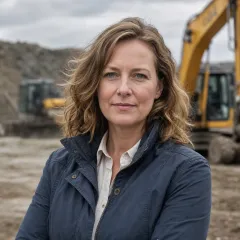
Charlotte Avery is an earth-moving machinery analyst covering excavators, mini excavators, loaders, skid steers, dozers, graders, compactors, and attachments. She uses ISO 6165 machine classification and ISO 20474-1 safety requirements while examining operating mass, rated payload, breakout force, ground pressure, stability, visibility, guarding, and attachment compatibility. Her work helps contractors and fleet buyers match machine size, undercarriage, transport limits, and protective features to terrain, duty cycle, and jobsite access.