Same Part Number, Same Fit, Different Result: Crusher Private Label vs. Rock Crusher OEM Reality
In March 2025, a quarry manager called me with an emergency order. The cone crusher was down, the maintenance crew was on standby, and the replacement liner set was normally a two-week lead-time item. He wanted to know if we could move faster.
The obvious fix was to quote the liner and start chasing shipping. But I knew this wasn't a lead-time problem. It was a decision problem from two months earlier.
That was when he switched to a private-label crusher wear part to save money. The parts were cross-referenced to the same Sandvik part number he had used for years. The foundry said they were interchangeable. They fit the crusher. The first set wore through in about a third of the expected life.
Same machine. Same operator. Same settings. Different part. Or rather, different part with the same cross-reference number.
The surface problem: the replacement part wore out too fast
At first glance, this looks like a simple quality problem. The private-label liner was cheap, it wore out quickly, and the answer is to buy the OEM liner next time. That conclusion is comfortable, but it misses the point.
When I triage a crusher failure, I don’t quote parts from a photo alone. I ask for feed size, closed-side setting, eccentric throw, tonnage, power draw, and how many hours the last set actually delivered. Not to delay the order—to keep the next set from failing the same way.
The truth is that many replacement parts don’t simply wear out. They are pushed beyond what they were engineered to do because someone assumed the part was the only variable. On a cone crusher, the mantle and concave are the active crushing surface of a system designed around a specific motion, feed profile, and power curve. Change any of those and a good liner can perform like a bad one.
What “crusher private label” actually means
I’m not going to say all private-label crusher parts are bad. I have mixed feelings about them. Some independent foundries make excellent products, and I’ve seen aftermarket liners perform well at a lower price. If you have data and traceability for that specific part, it can be a reasonable sourcing decision.
The problem is treating “private label” as if it means the same thing every time. It doesn’t. Some private-label parts are made from genuine drawings. Some are reverse-engineered from a used part. Some are cast from an independent design with limited field testing.
The most dangerous version is reverse engineering from a worn liner. A used liner has already changed shape. If a foundry copies that shape, it’s effectively producing a new part that starts life partially worn. It fits the machine, but it changes the crushing chamber geometry, power draw, and product shape. It may run fine for a few days. Then it starts doing exactly what an old liner does: wearing unevenly and sending abnormal forces through the crusher.
What rock crusher OEM engineering is really for
This is where people often get stuck on price. On a bill of materials, a rock crusher OEM liner costs more. But most of that cost is not metal. It is engineering, testing, and process control.
An OEM liner isn’t designed merely to fit a machine. It is designed to fit a chamber geometry, feed condition, and output target. The crushing zone is based on years of operating data. The alloy and heat treatment are selected so the surface wears at a predictable rate. Dimensional tolerances are checked. None of that is visible in the part number, but it shows up in total cost per tonne.
I’m not a metallurgist, so I can’t walk through every alloy formula. But after hundreds of failure discussions, I can tell you what field evidence shows: identical dimensions can perform very differently when metallurgy and heat treatment are different. A private-label foundry can do this work well too. The question is whether they actually did it for the part you’re buying.
If a supplier can offer an alloy certificate, heat number, dimensional report, and application data, that’s a spec. If the answer to “what’s the specification?” is “same as the OEM part,” that’s not a spec. That’s hope.
Use a drilling rig specification guide as a baseline, not a promise
The same logic applies to drilling, and it’s often worse because of the way machines are compared.
I’ve seen procurement teams line up two drilling rig specification guides, see similar impact power and drill steel diameter, and declare the rigs equal. That is like comparing two trucks by horsepower and ignoring the gearbox. It misses how the whole system behaves.
A drilling rig specification guide is useful, but it’s only a starting point. Air flow, impact pressure, rotation torque, feed force, and rod handling all interact. If one parameter is wrong for the ground conditions, the best drifter in the world will still produce poor penetration.
Sandvik rock drills, for example, are published with specifications for a reason. On paper, impact energy tells part of the story. In practice, rotation torque and flushing air determine whether the drill steel keeps turning and whether the hole stays clean. A Sandvik rock drill that performs well in limestone may struggle in deep, fractured granite if you bought it based on one number instead of the full application picture.
When somebody tells you a replacement rock drill or hydraulic hammer “fits” a Sandvik rig, ask for the test data behind that claim. Fit is about dimensions. Performance is about the interaction of pressure, rotation, flushing, and ground conditions. Those are different conversations.
What ignoring this costs in practice
Wrong components don’t always cause an immediate breakdown. That’s why they’re dangerous. A mismatched liner can create high localized crushing forces that shorten bearing life or fatigue the main frame. A poorly matched rock drill can reduce penetration, stall the steel, or damage the drifter long before the problem becomes visible.
By the time the failure appears, the original purchasing decision is a distant memory. Nobody remembers the $8,000 saved on the part. They only remember the 30 hours of downtime during peak season.
I’d rather spend ten minutes explaining the difference between fit and performance than sell someone a second set of emergency parts next month. An informed buyer asks better questions and makes faster decisions.
A practical decision rule
If you don’t know your actual application data, stay with the OEM part until you do. That isn’t blind loyalty to the original brand. It’s simply the option with the most engineering behind it.
If you want to evaluate an independent supplier, treat it like an engineering test rather than a price test. Buy one set, run it under controlled conditions, record tonnage, power draw, wear pattern, product quality, and total service life. Compare that with the OEM baseline. That gives you a real answer instead of a marketing claim.
For critical equipment, keep a set of OEM wear components available even if you normally run another brand. During an emergency, you don’t want to be asking deep technical questions about a part you’ve never validated. You want a known baseline that will fit, perform, and get the plant running again.
And if someone promises 100% uptime or zero breakdowns, walk away. No serious supplier can guarantee that without knowing your ore type, operating hours, feed conditions, and maintenance history. What a serious supplier can do is provide application data, traceability, and a part engineered for the machine it goes into. That certainty is worth more than a cheap crossover number.
The problem isn’t private-label parts. The problem is treating them as identical when they aren’t. A part number can be the same. The engineering behind it often isn’t.
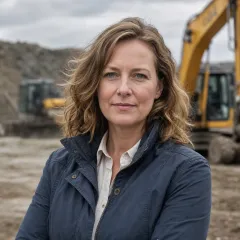
Charlotte Avery is an earth-moving machinery analyst covering excavators, mini excavators, loaders, skid steers, dozers, graders, compactors, and attachments. She uses ISO 6165 machine classification and ISO 20474-1 safety requirements while examining operating mass, rated payload, breakout force, ground pressure, stability, visibility, guarding, and attachment compatibility. Her work helps contractors and fleet buyers match machine size, undercarriage, transport limits, and protective features to terrain, duty cycle, and jobsite access.