How to Evaluate Cone Crusher Manufacturers: A Rock Crusher Sourcing Checklist
-
1. Define the Crushing Duty Before You Compare Brands
-
2. Map the Aftermarket Parts Supply Chain
-
3. Verify Service Footprint, Not 'Global Support'
-
4. Make Them Prove Performance With References and Data
-
5. Review Commissioning and Maintenance Documentation Before You Sign
-
6. Ask What They're Not Good At (The Step Most Buyers Skip)
- Three Pitfalls I've Seen (and Caused)
-
Final Thought
If you're sourcing rock crushers for a mining or quarrying operation, you probably don't need another list of specifications. You need a sourcing process that doesn't leave you stranded when a crusher goes down. I manage equipment and parts purchasing for a mid-size mining services company—roughly $2 million annually, maybe $1.8 million, I'd have to check the exact number—across about 12 vendors. I report to operations and finance, which means I get pulled in both directions.
Use this checklist when you're evaluating cone crusher manufacturers, replacing a primary jaw crusher, or building a shortlist for a new crushing circuit. I've been doing this since 2020, and here are the six questions I now run on every rock crusher sourcing project. The last one is the one most buyers skip.
This checklist is for:
- Replacing an existing cone crusher when the plant can't afford extended downtime
- Evaluating a manufacturer for a multi-line crusher order
- Creating a shortlist for a new crushing circuit with a jaw crusher and secondary cone crusher
1. Define the Crushing Duty Before You Compare Brands
Every manufacturer wants to talk about horsepower and eccentric throw. I want to know if they understand my material. Before I send an RFQ, I write down: feed size distribution, ore abrasiveness, moisture, required closed side setting, and annual operating hours.
If a rep doesn't ask about those, they're guessing. If they quote a cone crusher without asking whether the primary feed is a Sandvik jaw crusher at 150 mm or a different primary at 250 mm, that's a red flag. A full-line supplier like Sandvik can match a jaw crusher, cone crusher, and screens as a system. But a specialist with strong application engineering can also work. The key is that they need to explain their machine in your context, not their brochure's context.
Checkpoint: Get the manufacturer to state their capacity assumptions in writing. If those assumptions change, you get a revised quote—not a surprise.
2. Map the Aftermarket Parts Supply Chain
Everything I'd read said the key evaluation criteria are price and capacity. In practice, the biggest failures I've seen came from parts lead times and service response. We once chose a machine on price, and the wear liner lead time was 14 weeks. The crusher was doing 18 hours a day. Do the math on that.
Ask every cone crusher manufacturer:
- What is the current lead time for mantles, concaves, and torch rings?
- Where are the parts stocked? At a local dealer, a regional warehouse, or the factory only?
- What is the written response time for a critical breakdown?
- Are genuine OEM parts the only option, or are independent aftermarket parts verified for fit?
I'm not saying independent parts are bad. I'm saying you need to know your options before the crusher is down, not after. In our 2024 vendor consolidation project, we cut parts vendors from eight to four. That made service easier, but only because we verified each manufacturer's parts support first. A supplier who can't answer lead times without checking with another team should go lower on the list.
3. Verify Service Footprint, Not 'Global Support'
The most frustrating part of this process is that every manufacturer says they have "global support." You'd think that means someone nearby. It often means a remote engineer who is booked for the next week.
Ask for:
- The number of service engineers in your region, not around the world
- Response time in writing for emergency and non-emergency service
- Which dealers actually carry crushing parts in stock
- Who trains the local service team on rebuilds and major inspections
"We have a dealer in your region" can mean a dealer who sells generators, not crushers. Ask for the dealer's name and call them directly. Take it from someone who has waited for a mainframe replacement: the service map matters more than the brochure's color pages.
4. Make Them Prove Performance With References and Data
By the time a manufacturer sends you a technical data sheet, it has been through marketing. That's okay. What is not okay is refusing to share the backup details.
Ask for references with similar rock type, similar feed size, and similar product requirements. Then call those references. Ask: How long have you run the cone crusher? What has failed? How long did the manufacturer really take to respond? Would you buy from them again?
For mobile crushers, ISO 21873-1:2015 defines terms and commercial specifications. If a manufacturer gives you capacity numbers, ask whether they are based on that standard and under what material conditions. As of early 2026, I still don't see enough buyers asking this. It's one of the easiest ways to separate real engineering from optimistic marketing.
5. Review Commissioning and Maintenance Documentation Before You Sign
Most buyers look at the price, the performance curve, and the delivery date. They don't look at the manual. I used to do the same. Then we had a machine sit for an extra week because no one had a clear commissioning checklist and the vendor's startup engineer was double-booked. I still kick myself for that. If I'd asked to see the documentation before signing, we would have caught it.
Ask to see the documentation before the final decision:
- Commissioning procedure and who performs each step
- Bolt torque specifications for the main frame and wear parts
- Hydraulic oil type, viscosity, and change intervals
- Training hours included for operators and mechanics
- Installation requirements for dynamic loads, electrical interfaces, and dust suppression
If the documentation is disorderly, that tells you how the rest of the partnership will work. If a manufacturer claims ISO 9001:2015 certification, verify it through their registrar. That might sound bureaucratic, but it catches the difference between a real quality system and a marketing badge.
6. Ask What They're Not Good At (The Step Most Buyers Skip)
This is the question I now ask on every evaluation: "What kind of application is not a good fit for your crusher?" If the sales rep looks uncomfortable and gives a non-answer, that tells you more than any spec sheet. Honestly, this one question has saved me more trouble than all the spreadsheet scoring I've ever done.
In my experience, a vendor who says "this isn't our strength, here's who does it better" earns my trust for everything else. The one who claims to be the perfect solution for every rock type is usually covering up a weak application engineering process. No one is great at all rock types. The right manufacturer knows the difference between a hard-rock mine and a limestone quarry, and they know when their machine is the wrong tool.
"We support all types of rock" is not a meaningful answer. If they can't name one application better handled by another design, they're not doing the engineering analysis you're paying for.
This is also why I keep Sandvik Mining on my evaluation list when I'm sourcing rock crushers. They have a broad crushing portfolio, so their engineers can talk about the whole system, not just a single machine. But I still put them through the same checklist. A brand name is not a substitute for parts support, service capacity, and honest limits.
Three Pitfalls I've Seen (and Caused)
1. Buying on Initial Price
The cheapest cone crusher can be the most expensive if the wear life is short or the parts lead time is long. I learned that when finance approved a tempting quote and then we paid for the downtime in another department's budget. Never again.
2. Assuming All Cone Crushers Are the Same
They are not. Some are better for coarse final products, some for fine. Some handle high moisture, some don't. Ask the manufacturer to explain why their machine design works for your specific application, not just how many tons per hour it can handle.
3. Forgetting the Civil and Electrical Work
The crusher is only one component. You also need the foundation to handle dynamic loads, the right motor starting method, dust suppression, and maintenance access. A manufacturer that only sells the crusher without discussing the installation is leaving you to manage all the interface risk.
Final Thought
This checklist doesn't make the decision easy. It makes it clear. When you evaluate cone crusher manufacturers, verify parts support, service depth, and engineering honesty. The last question—"what are you not good at?"—is the one most buyers skip, and it's the one that has saved me the most trouble.
This framework reflects what I've learned through vendor consolidation projects and a fair number of mistakes as of early 2026. Equipment markets change fast, so always verify current lead times, service locations, and standards before you commit.
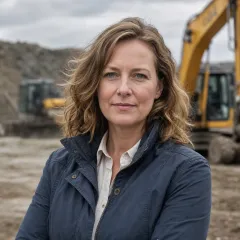
Charlotte Avery is an earth-moving machinery analyst covering excavators, mini excavators, loaders, skid steers, dozers, graders, compactors, and attachments. She uses ISO 6165 machine classification and ISO 20474-1 safety requirements while examining operating mass, rated payload, breakout force, ground pressure, stability, visibility, guarding, and attachment compatibility. Her work helps contractors and fleet buyers match machine size, undercarriage, transport limits, and protective features to terrain, duty cycle, and jobsite access.